Do You Hang Porch Swings at Homes and Businesses?
Yes, we hang swings on house porches and at rentals, inns, venues, and restaurants with covered porches. Let us know the property type and the size of the swing.
Porch Swing Installation Kings provides porch swing installation, daybed swing hanging, and swing stand setup services in the Huntsville, TX area for both residential and commercial properties, from hanging a new swing on an open porch ceiling to adding blocking behind a finished one. Contact us now for a free estimate.
Porch swing installation in Huntsville, TX costs anywhere from $130 to $340 on average to hang one bench swing you already own from an accessible ceiling joist with new hardware. The price depends on the ceiling type, whether the joists line up or need blocking, the size and weight of the swing, whether it needs assembly, and the ceiling height.
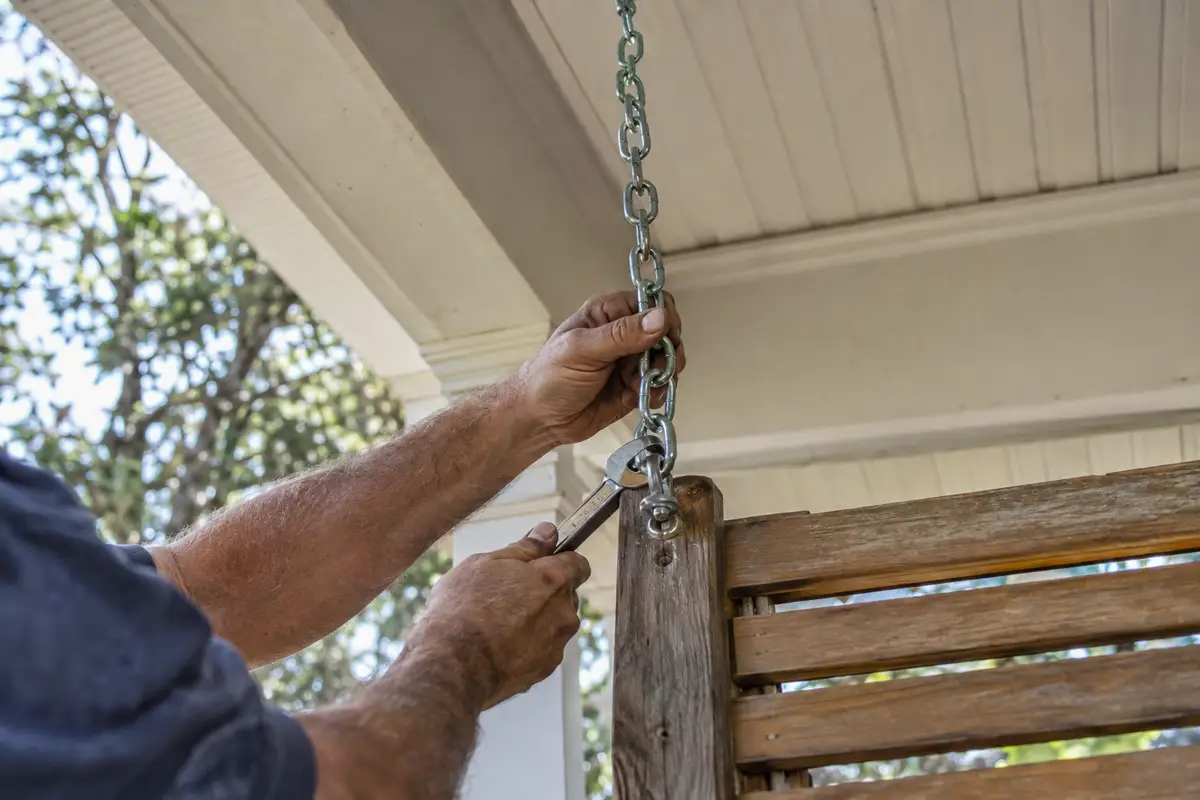
Yes, we hang swings on house porches and at rentals, inns, venues, and restaurants with covered porches. Let us know the property type and the size of the swing.
Yes, we cover the Huntsville, TX area. Send us the property address and we'll confirm.
Yes, we hang swings you've already bought, online or in a store. Send us the brand, width, and weight, and tell us whether a hanging kit came in the box.
Yes, just tell us it's still in the box so we allow time for assembly.
No, we can bring hardware sized to your swing and framing. If a hanging kit came with the swing, we check it and use it when it suits the job.
Most swings can usually be hung within a few days of booking. Jobs that need blocking or a new support beam may take longer to schedule.
We need the address, the swing's width and weight, photos of the porch ceiling, and the ceiling height. Tell us whether the ceiling is open rafters, beadboard, vinyl, or drywall.
No, as long as we can reach the porch and you've approved the spot. It helps to be there when we mark the location, and to sit in the swing before we leave so we can adjust the height.
Yes, but get your landlord's approval first, since we drill into the porch framing and sometimes open the ceiling.
No, hanging a swing from an existing porch doesn't usually need a permit. Building a new beam or porch structure can, and your local building office decides that.
Yes, we confirm the price before starting. If we open the ceiling and find rot or undersized framing, we show you and price the fix before going further.
Yes, blocking, opening a finished ceiling, or adding a new beam takes more time and material than hanging from an exposed joist. Ceiling photos help us price it up front.
A swing on an open or easy-to-reach joist usually takes 1 to 2 hours. Removing ceiling panels and adding blocking typically stretches it to 3 or 4 hours.
Somewhere with about 3 to 4 feet of open space in front and behind and 12 to 16 inches on each side. Mark the outline on the floor with painter's tape and sit there before we drill.
Most swings hang with the seat 17 to 19 inches off the floor so feet reach the ground. Taller households often prefer 18 to 24 inches, and we adjust it after you try it.
Yes, usually, if the swing hangs from a sound 2x6 or larger joist supported at both ends. We check for rot, sagging, and undersized framing before we drill, and reinforce it when needed.
Most bench swings are rated around 300 to 600 pounds, and the hardware and framing must hold more than that because swinging adds force. We size everything to the swing maker's rating.
Yes, but large teak or oak swings and anything much wider than the usual 4 or 5 feet need solid framing and well-spaced anchors. Send us the weight and length so we can plan the support.
We add 2x4 or 2x6 blocking between the joists, or a beam spanning several of them, and hang the swing from that. Tell us which way the joists run if you can see them.
Yes, we locate the joists above the boards and drill through. If there's attic access over the porch, we can check the framing and add blocking from above without disturbing the ceiling.
Yes, we pry off the vinyl panels, add blocking behind them if needed, and refit the panels loosely so the vinyl can still move. Vinyl can't hold a swing by itself, so the hardware always goes into wood framing.
Yes, we drill through to the joists and seal around the hardware. If blocking is needed, we may have to cut and patch a section of the ceiling, and we'll tell you that up front.
Yes, in most cases, using masonry anchors rated for the load instead of wood screw eyes. Tell us if the porch sits under a concrete balcony or slab so we bring the right drill and anchors.
No, not from the cover panels. Most aluminum and vinyl patio covers aren't built for a swinging load, so we suggest a swing stand or a wood beam tied into solid framing instead.
Yes, if the beam is solid wood and the posts are well anchored. A swing pushes the pergola back and forth, so we check the post footings and connections first.
Yes, from the deck joists, as long as they're sound and sized for it. The deck already carries its own load, so we check the joists and their hangers before choosing a spot.
No, we don't recommend it. Bark grows over chains and rubbing damages the branch and invites rot and insects. A freestanding swing stand under the tree works better.
Yes, we assemble the stand, hang the swing, and level it. On grass or soft ground we can anchor the legs so the frame doesn't walk when the swing moves.
Yes, we hang bed swings from four lag-bolted ceiling brackets, with the bed about 10 to 12 inches off the floor. They're heavy, so we usually tie into two joists or add blocking.
Yes, a hanging chair goes on one heavy-duty eye hook or swivel hook driven into the center of a 2x6 or larger joist.
Yes, we take down the old swing, check the old holes and the framing, and fit new hardware instead of reusing worn or rusted screw eyes.
Yes, we take it down, fill and touch up the old holes, and hang it where you want it, adding blocking if the new spot needs it.
We set them 2 to 4 inches wider than the swing so the chains clear the arms. A 60 inch swing gets anchors about 62 to 64 inches apart.
We usually use 4 inch stainless screw eyes in newer framing, 6 inch through eyebolts with nuts in older homes, or lag-bolted ceiling brackets. We size them to the joist and the swing.
Chain is what we use most, since galvanized or stainless chain handles weather well, though it can be noisy. Rope looks softer, but it should be marine-grade nylon or polyester and checked every few months.
Yes, comfort springs go between the ceiling anchor and the chain.
Yes, we lengthen the back chains by a link or two so the seat tips slightly back. Sit in it and we'll adjust until it feels right.
Yes, if you have an open, sound joist exactly where you want it. Finished ceilings, joists in the wrong place, and heavy swings are where most DIY installs go wrong.
Usually it's metal rubbing on metal at the hooks or chain links. We can swap in swivel hooks or coated hardware, or tighten anything that has worked loose.
No, not usually. Many chain-hung swings stay up all year, though some owners store wood swings and cushions indoors in harsh winters. We can take a swing down and rehang it in spring.
